 blog
How to Find an Authentic Punk Rock Apparel Online Shop
Last Updated: November 1, 2026
Quick Summary
To find an authentic punk rock apparel online shop, verify the seller's identity and confirm the artwork traces to a specific band release, tour, or press photo. Check for a copyright or licensing line on the tag or listing, and make sure the band's own channels link back to the store. If any check fails, treat the item as an original punk-inspired design rather than official band merchandise.
- A licensed shirt carries a designer, a release, and an identifiable seller; a bootleg has a stolen image and a mystery printer.
- An official store sells a coherent catalog tied to one artist or a small roster, not hundreds of unrelated bands.
- Look for a copyright or licensing line such as © artist or under license to a company on the tag or inner hem.
- A high price is not proof of authenticity, so verify the seller and artwork instead of the number on the tag.
- Most vintage listings online are not genuine, so ask for tag photos and stitching shots before paying.
Table of Contents
- Why Authentic Punk Rock Apparel Still Matters
- How to Verify Official Band Merch Before You Buy
- What Official Punk Band Merchandise Should Include
- The Truth About Vintage Punk Rock T-Shirts
- What to Look For in an Official Band Merch Store
- Ordering Direct From 51 Boneyard Music
- Frequently Asked Questions
Why Authentic Punk Rock Apparel Still Matters
Authentic punk rock apparel is clothing and merchandise produced or licensed by the band itself, carrying original artwork and designs that trace back to the artist rather than a third-party print shop. The global T-shirt market alone was valued at $30.68 billion in 2026, according to Printful's T-shirt industry statistics, and punk's visual language sits at the center of that growth.
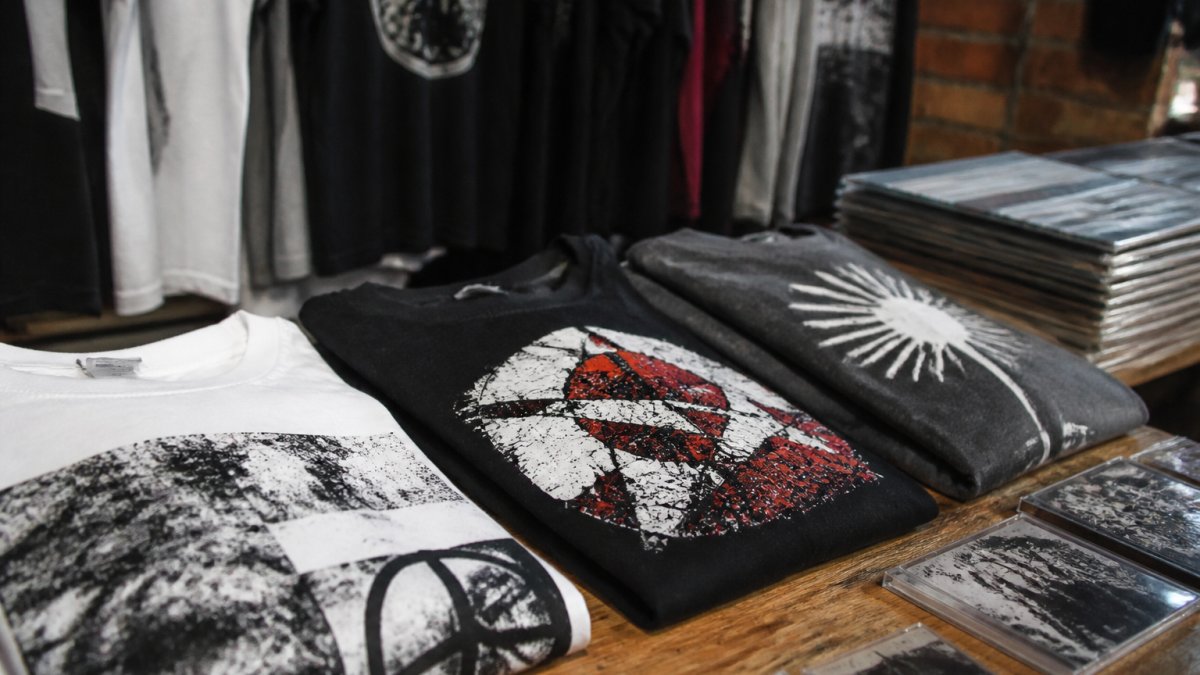
A real band shirt and a knockoff can often be told apart with a closer look at the tag, print, and stitching.
Authenticity isn't a vibe, it's a paper trail. A licensed shirt has a designer, a release, and an identifiable seller. A bootleg has a stolen JPEG and a mystery printer.
How to Verify Official Band Merch Before You Buy
Verification comes down to two checks: who is selling, and whether the artwork matches something the band actually released.
Check the Seller's Identity and Storefront
A legitimate seller names the band, links to the band's music pages, and lists a contact method. Look for a storefront tied to the artist's own catalog rather than a marketplace listing with a generic name.
A polished product photo proves nothing. Bootleggers lift official photography and reprint it, so the image looks perfect while the shirt arrives thin and off-register.
Run these checks in order:
- Domain and about page. The store should state who runs it, where it ships from, and how to reach a person. A contact form with no reply address and no business name is a pass.
- Catalog coherence. An official store sells a coherent catalog tied to one artist or a small roster. Hundreds of unrelated bands and identical mockups across every listing is a reseller pattern.
- Cross-links. The band's own site or verified social profile should link to the store. A store never linked from the artist's channels is unverified.
Match the Artwork to the Band's Own Releases
Compare the shirt graphic against the band's album art, singles, and press photos. Academic work on punk style notes that symbols like safety pins and ripped denim get pulled out of their original context and reused as decoration, which is exactly why a design's source matters (Cogan, "What Do I Get? Punk Rock, Authenticity, and Cultural Capital").
If the same artwork appears on a shirt and on the band's own record sleeve, you're on solid ground.
Read the Tag, Print, and Licensing Language
Authenticity leaves physical evidence. You will not always get tag photos before buying, but when a listing shows them, read them closely:
- Neck tag and print label. Official runs usually carry a brand tag (the blank manufacturer) plus a separate printed or woven label identifying the artist or licensor. A single generic tag with no artist reference is a warning sign, not proof of a fake.
- Copyright and licensing line. Look for "© [artist]" or "under license to [company]" on the tag or inner hem. Unlicensed reprints typically omit the copyright line or reproduce it with the wrong year.
- Print method. Screen printing lays down opaque ink with visible edges and holds up over many washes; direct-to-garment prints sit in the fabric and often look soft or speckled up close. Neither is inherently fake, but a listing claiming a vintage screen print while showing a soft, photographic DTG texture is misrepresenting the product.
A high price is not proof of authenticity. Bootleggers price near official levels precisely because buyers use price as a shortcut. Verify the seller and the artwork, not the number on the tag.
Know What "Authentic" Does and Does Not Mean
"Authentic punk rock apparel" gets used two ways, and the distinction matters at checkout:
- Officially licensed band merchandise, produced with the artist's permission, carrying their artwork and a licensing line.
- Original punk-inspired designs, made by independent designers in the punk visual tradition, not tied to a specific band.
Both can be legitimate. The problem is a seller who markets category 2 as category 1. If a listing shows a band name and album art but no licensing language anywhere, ask the seller directly which category the product falls into. A straight answer is a good sign; silence or a vague reply is your answer.
A Five-Minute Verification Checklist
Before you pay, confirm:
- The store names the artist and links to their music
- The artist's own channels link back to the store
- The artwork traces to a specific release, tour, or press photo
If any box stays unchecked, treat the purchase as a gamble on an original design rather than a band shirt, and price it accordingly.
Run these checks in order before you pay for any band shirt.
| Check | What to look for | Warning sign |
|---|---|---|
| Domain and about page | Who runs it, where it ships from, contact method | Contact form with no reply address or business name |
| Catalog coherence | Coherent catalog tied to one artist or small roster | Hundreds of unrelated bands, identical mockups |
| Cross-links | Band's own site or verified social profile links to store | Store never linked from artist's channels |
| Payment and policy pages | Shipping windows, return terms, privacy policy | Missing pages or templates with another store's name |
| Neck tag and print label | Brand tag plus separate artist or licensor label | Single generic tag with no artist reference |
| Copyright and licensing line | "© [artist]" or "under license to [company]" | Copyright line omitted or wrong year |
| Print method | Screen print with opaque ink and visible edges | Soft, photographic DTG texture claimed as vintage screen print |
| Stitch and seam quality | Double-stitched hems, clean seam tape | Loose threads, puckered seams, off-register prints |
What Official Punk Band Merchandise Should Include
Official punk band merchandise should include the pieces a band actually designs: band shirts, hoodies, patches, stickers, and physical music carrying the same artwork.
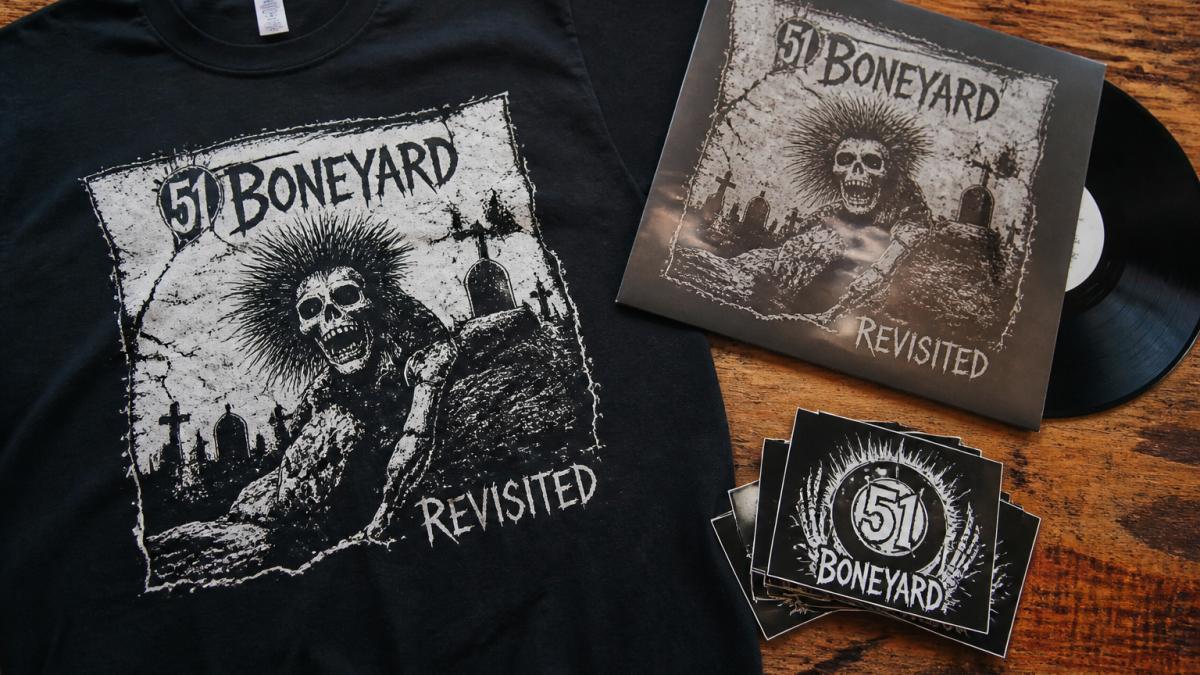
The core lineup usually covers:
- Punk T-shirts with original designs printed front or back
- Hoodies and jackets for colder shows and everyday wear
- Patches, stickers, and pins for jackets and cases
Shirts that carry album artwork show how the garment and the record can work as one product.
The Truth About Vintage Punk Rock T-Shirts
Vintage punk rock T-shirts are original-era or reissued garments from a specific tour or release, and most "vintage" listings online are neither.
Reprints are fine if they're labeled as reprints. The problem is sellers who age a modern shirt with sandpaper and call it vintage.
For collectors weighing physical media against streaming, the same logic applies to records: condition and provenance decide value. Readers comparing formats can dig into whether vinyl sound quality is better than digital.
What to Look For in an Official Band Merch Store
An official band merch store should do four things: identify the band clearly, show real product photography, state shipping terms, and give you a way to reach a human. Anything less is a red flag. But the details that actually decide whether a purchase works out, fit, fabric, and how the garment holds up, are the ones most store pages skip. This section covers both the baseline checklist and the specifics worth demanding before you check out.
The Baseline Checklist
- The store names the band and links to their music
- Product pages show the actual garment, not a mockup alone
- Size charts list measurements in inches or centimeters
That list filters out the obvious problems. It does not tell you whether the shirt will fit or survive a season of shows, so keep reading.
Sizing and Fit: Read Measurements, Not Letters
Sizing is where most buyers get burned. A "large" from one printer fits like a medium from another, because blanks vary by manufacturer and cut. Two garments labeled the same size can differ by an inch or more at the chest and several inches in body length.
What to do instead of trusting the letter size:
- Measure a shirt you already like. Lay it flat and measure pit-to-pit (armpit seam to armpit seam), body length (collar seam to hem), and sleeve length from the shoulder seam. Write those numbers down.
- Compare against the store's chart. A useful chart lists those same measurements per size in inches or centimeters. If the store only lists S/M/L/XL with no numbers, ask for measurements before ordering.
- Expect unisex cuts to run boxy. Most band tees are printed on unisex blanks, which means a straighter body, wider shoulders, and a longer length than a fitted women's cut. If you want a closer fit, size down one; if you want an oversized look, size up one.
Save your measurements in a note on your phone. Once you know your pit-to-pit and body length, you can compare any store's chart in seconds and stop guessing at checkout.
Materials, Construction, and Durability
Style descriptions tell you what a garment looks like. They rarely tell you what it is made of or how long it will last. Ask about these specifics:
- Fabric weight. Band tees are commonly printed on blanks of varying fabric weight. Lighter weights drape and breathe; heavier weights feel more substantial and hold print detail longer. A listing that states the fabric weight is a sign the seller knows the product.
- Fiber content. 100% cotton takes screen printing well and shrinks; cotton/polyester blends resist shrinkage and dry faster but can pill. Read the blend before you buy if either behavior matters to you.
- Print method and placement. Screen printing generally outlasts direct-to-garment printing on high-wear areas. Check whether the print is centered, whether it wraps seams, and whether the listing shows the back print as well as the front.
Shipping, Returns, and Total Cost
Price on the product page is not the price you pay. Before checkout, confirm:
- Shipping cost and carrier. Calculated shipping should show a total before payment. Flat-rate and free-shipping thresholds change the math on multi-item orders.
- Delivery window. A stated window (business days, not "soon") lets you plan around a show date. If you need a shirt for a specific event, order with buffer time and ask the seller to confirm the ship date.
- Return and exchange terms. Look for the window length, who pays return shipping, and whether sale or pre-order items are excluded. A plain-language policy is a better signal than a long one.
If you want to browse a full lineup to see what an official store actually stocks, and compare charts, materials, and policies side by side, our merch collection shows the range.
Ordering Direct From 51 Boneyard Music
Ordering direct from 51 Boneyard Music means your purchase goes straight to the band. Our products feature original artwork by Vasser.
What you can get from us:
- The new album Revisited on CD
- Revisited on vinyl, available to pre-order
- T-shirts and stickers featuring the album art
Pricing and shipping depend on quantity, dates, and delivery, so check 51 Boneyard Music's website for current prices or a quote.
Frequently Asked Questions
How can you tell if punk band merchandise is official?
Start with the seller. An official band merch store is run by the band or its label, lists a real contact and return policy, and shows the same artwork the band uses on its own releases and social pages. Compare the design to the band's album covers and tour flyers. If the seller cannot name the artist behind the design, or the listing uses stolen press photos, treat it as unauthorized. Buying direct from the band's own site removes the guesswork.
Where can you buy authentic punk rock apparel online?
The safest route is the band's own website, where you buy punk rock apparel straight from the people who made the music. Independent labels and artist-run stores are the next best option. Specialist shops can carry genuine stock, but ask who printed the shirt and whether the band approved the design. Marketplace listings and print-on-demand pages that appear overnight with dozens of designs are usually unauthorized. Check the store's about page, shipping terms and reviews before you spend.
Does buying official band merchandise support the band?
Yes, and often more than streaming does. Merch and physical media sales put money directly in the artist's hands, while streaming pays a fraction of a cent per play. For a small independent act, one shirt or one CD can outweigh thousands of streams. Buying from the band's own store also means no third-party seller takes a cut. It funds pressing runs, artwork and the next show.
Are vintage punk rock T-shirts authentic band merchandise?
Some are, many are not. Genuine vintage punk rock T-shirts come from the original tour or release era, and collectors check the tag, the print method and the copyright line on the graphic. Reprints sold as vintage are common. If a seller claims a shirt is from a 1980s tour, ask for close-up photos of the tag and stitching. For current designs, buy from the band's official store instead of paying a premium for an unverified original.
The difference between supporting a band and supporting a bootlegger is one verification step, and it takes about two minutes. We built 51 Boneyard Music around original artwork, physical releases, and a direct line to the people making the music, so every purchase lands where it should. Get started with 51 Boneyard Music and pick up the Revisited merch knowing exactly who made it.